Ph.D. vs. Dr. - Which path is better? A guide for the HdM community
Career entry or scientific specialisation?
Many graduates are faced with this important question after completing their studies. Those who decide to do a doctorate are again spoilt for choice: a structured international Philosophiae Doctor, (Ph.D.) or the classic German doctorate? Both titles stand for the highest academic qualification - but there are subtle, sometimes decisive differences. Two lecturers at Hochschule der Medien (HdM) report from their own experience.
Ansgar Gerlicher and the structured Ph.D
Ansgar Gerlicher, professor at the HdM, completed his doctorate at the London College of Communication and describes the process as complex and strictly formalised. At the same time, it was precisely this structured and fair process as well as the intensive supervision that convinced him. Even the admission process was demanding: "I had to present my topic, submit a detailed exposé, go through several loops and present myself to a committee at the end." During the doctorate, all meetings with the supervisors were documented. After two and a half years, there was an interim examination, followed by the final examination after a further two and a half years. This was supervised by two independent examiners. "Contact with both was expressly forbidden in advance. My supervisors were allowed to listen, but not to intervene - no talking, no signalling, nothing," he explains. This served to ensure the objectivity of the process.
Transmedia research: The individual path of Sabiha Ghellal
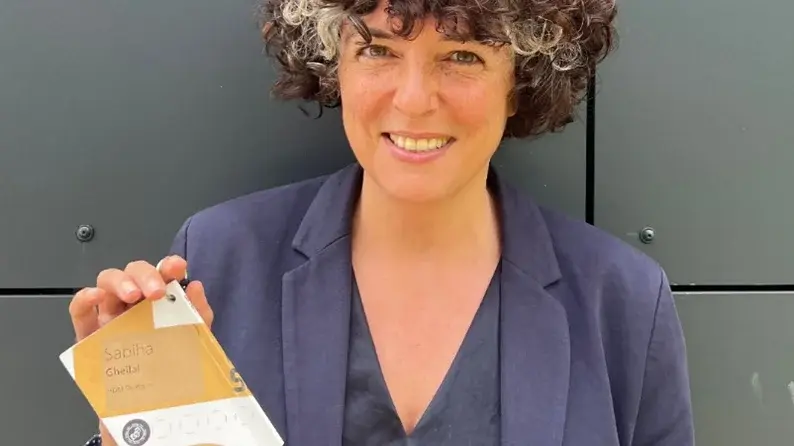
Sabiha Ghellal, professor at the Hochschule der Medien (HdM) in Stuttgart, has found her very own path to a doctorate. She initially worked as a manager for research and innovation at Sony Europe and published several scientific papers during this time - including at the renowned CHI Conference for Human-Computer Interaction(CHI 2007). Only then did she actively start looking for a doctoral supervisor. She originally began her doctoral project in Germany, as she was very interested in topics such as games and experience design. However, finding suitable supervision was not easy: "You need someone who understands that transmedia research for games creates knowledge at the interface of art, sound and technical development. Finding such a person is difficult," explains Ghellal. For this reason, she finally switched to her then second supervisor at Aalborg University in Denmark. With a structured doctoral programme in accordance with international PhD guidelines, the university offered her precisely the framework that better suited her needs.
Ghellal cites the presentation of her game at the conference for research in the field of "Designing Interactive Systems"(DIS 2014) as a particularly formative highlight of her doctorate: "That was a very special moment because I was able to present my work in a thematically appropriate session - entitled Horror, Vampires, Magic & Hobbits. It was inspiring to see that similar experimental approaches and the topic of research through design were recognised there."
HdM as a partner in the doctoral process
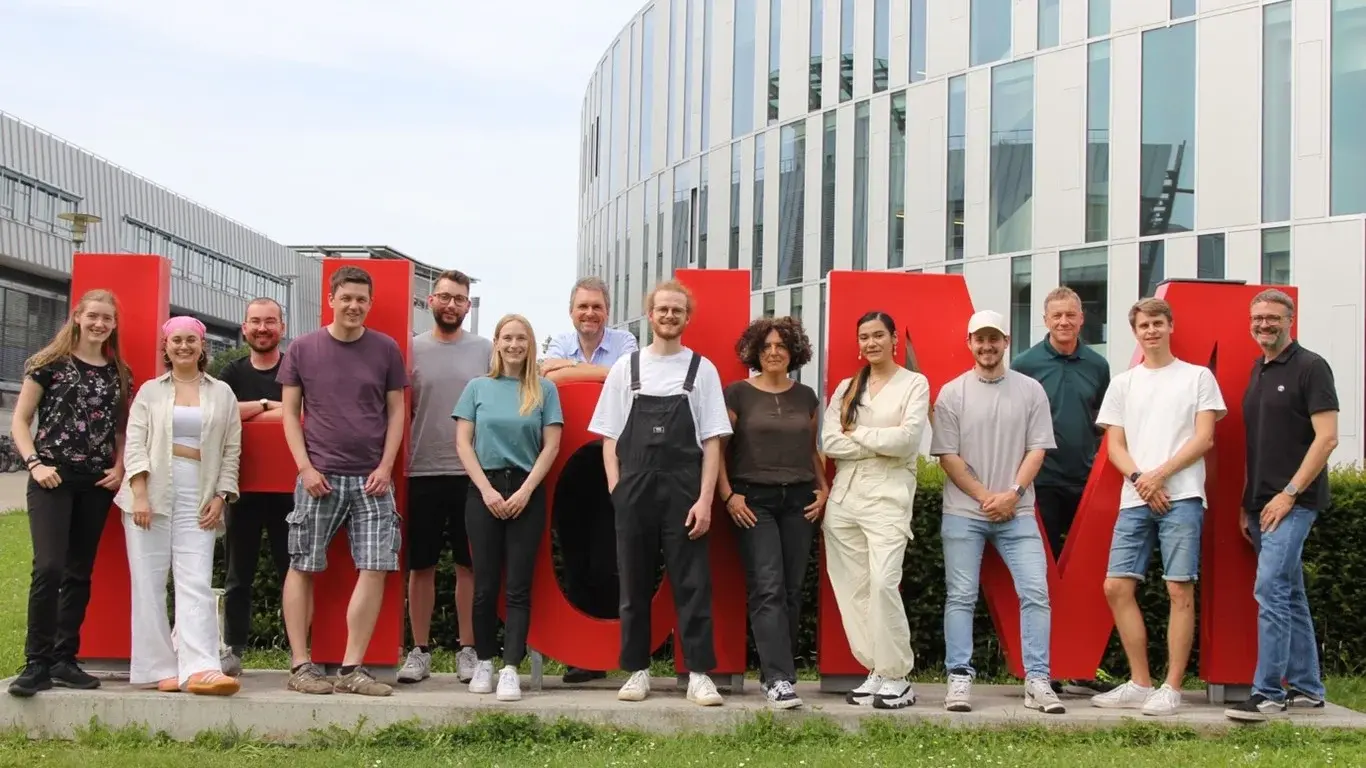
The HdM supports doctoral projects in various ways. At the moment, most supervision at the HdM is organised through partnerships, for example with the Glasgow School of Art in Scotland or Swansea University in Wales. In this case, the path then leads to a Ph.D. There is always a supervisor from the HdM, but the infrastructure and formal initial supervision come from the partner university that awards the degree. Some of the research takes place abroad. In co-operation with the University of Stuttgart or Tübingen, a German doctorate is awarded. Recently, it has become possible to do a doctorate directly at the HdM via the doctoral association - without any cooperation with a university. Professors like Gerlicher have since been authorised to supervise and examine doctorates independently. "The first doctoral projects have already started and we expect the first degrees to be awarded in the near future," says Gerlicher.
I've finished my Master's degree. Of course: I'm doing my doctorate!
Straight to a doctorate after a Master's degree? It's not quite that simple after all. Gerlicher puts it in a nutshell: "A doctorate is a decision that should not be taken lightly. It shapes your life for many years." In addition to professional enthusiasm, it requires above all perseverance, stress resistance and commitment. Setbacks are part of this: "You can't let them discourage you." Ghellal also shares this view: "You have to learn to deal with rejection and accept feedback constructively."
That sounds like hard work - why is a doctorate still worthwhile? If you are prepared to embark on a personally challenging journey, a doctorate can be very rewarding both intellectually and personally. "Knowing that my work has laid the foundation for technologies that are now commonplace in tools like Google Docs is a great feeling," reports Gerlicher. The conferences, meetings and conversations with international experts also had a huge impact on him: "Despite the challenges, I really enjoyed this time and learnt a lot from it."
A doctorate can lead to significantly higher salaries in industry. Gerlicher was able to observe a significant increase during his work in research and development at Daimler Benz. "In my experience, a doctorate is almost essential if you want to pursue a career in research and teaching," he says. And Ghellal? Thanks to her doctorate, she can now conduct research at a really high level and supervise doctoral students, particularly in order to promote research in the field of games.
Ph.D. or classical doctorate? The most important differences
The Ph.D. title is better known internationally than the German doctorate. It is regarded as the highest academic qualification in many countries. Simply labelling a German doctorate as a Ph.D., for example for international applications, is not recommended. Not every doctorate is as formalised and internationally structured as a Ph.D., which follows a clearly regulated research and examination process. Conversely, however, it is perfectly possible to have a Ph.D. officially recognised as a doctoral degree. So while the Ph.D. opens doors internationally in particular, the German doctorate continues to be highly regarded in German-speaking countries. Gerlicher explains: "For international career paths - for example in research or at universities outside Germany - I therefore consider the Ph.D. to be more valuable. It opens doors to academic positions where the German doctorate is sometimes not enough." In his opinion, the Ph.D. is particularly suitable for people "who are curious, open to other cultures and like to work in a structured and independent manner".
It's not just the title that counts: Why the reputation of the institution is crucial
Ghellal emphasises that it is not the academic title that should take centre stage, but rather the scientific orientation of the institution. The specialised infrastructure, the quality of the researchers and their international visibility through publications play a major role here. Another key aspect is the choice of doctoral programme: monographic or cumulative. Ghellal prefers the cumulative dissertation, as it is characterised by regular feedback, publications during the research process and closer links to academic exchange. The monographic doctorate, on the other hand, often requires several years of isolated work on a single, completed work. According to Ghellal, these structural differences have a significant impact on the quality of the doctorate and the individual research path.
Structuring as a central difference
Gerlicher and Ghellal agree that structuring is a key difference between a doctorate in Germany and a PhD abroad. Ghellal currently supervises doctoralstudents both in Germany and at the Glasgow School of Art , where the doctoral process is clearly regulated - with compulsory courses, annual progress reports and a strict separation between supervising and examining professors. This is intended to contribute to objectivity: "I would say that in Germany there is often a greater dependence on the supervisor or doctoral supervisor than abroad. In the UK, many things are more formalised, while the structures in Germany vary depending on the university."
Doctor or Ph.D. - what would Gerlicher and Ghellal choose today?
Both lecturers would opt for an international Ph.D. programme again today - because of the clear structure, the separation of supervision and assessment and the international perspective. Nevertheless, the traditional doctorate also has its advantages, especially in the German academic system. The doctoral programme also brings a breath of fresh air. The decision depends on the topic, your own goals and your preferred environment. The important thing is that if you want to do a doctorate, you should do so with conviction and know exactly what you are getting into.
Tips for doctoral candidates
To find a successful topic, it is important that...
there is genuine enthusiasm for the topic. Ideally, you should find a previously unresolved issue - in other words, a research gap. This requires an intensive examination of the topic. A good approach is to build on the master's thesis and pursue the topic further in the doctorate.
The university offers the necessary infrastructure.
When working with supervisors, it is important that doctoral students...
think in an action-orientated way.
communicate openly with their supervisors.
get feedback early and regularly, but also give the supervisor enough time to do so. In this way, challenges can be overcome together and you don't stray from the right path!
What is the difference between a cumulative and a monographic doctorate?
Cumulative doctorate: Individual scientific publications undergo a peer review processhttps://www.ub.hu-berlin.de/de/bibliotheksglossar/peer-review-verfahren which means external feedback and quality assurance at an early stage. This reduces dependence on a single final assessment. Regular publications ensure that the doctorate is up to date. The cumulative doctorate often takes three to five years to achieve the required number of published papers. This is usually at least three publications.
Monographic doctorate: The written dissertation is produced in the form of a single monograph. It enables the presentation of complex interrelationships, which is particularly relevant in certain disciplines. In addition, the completion of the dissertation is not tied to the review processes of academic journals.
Further useful links
Author
